
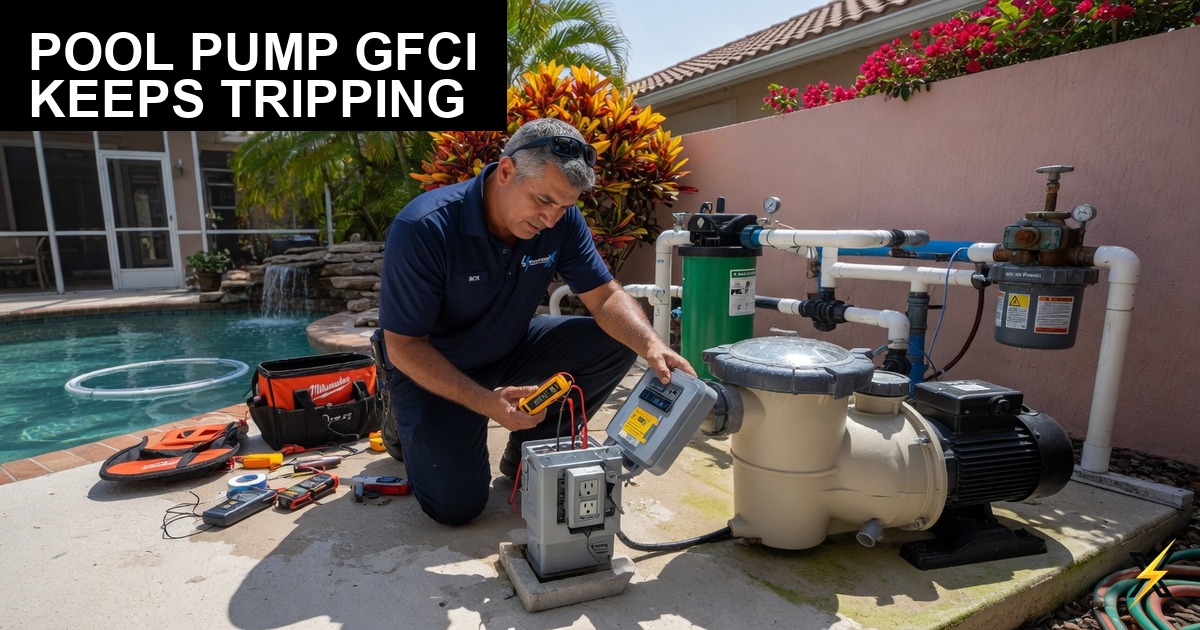
If your pool pump GFCI keeps tripping in Naples, you are not imagining things — and you are definitely not alone. Collier County homeowners run pool equipment year-round, and the combination of Florida humidity, afternoon thunderstorms, salt air near the coast, and aging equipment pads makes nuisance GFCI trips one of the most common pool electrical calls we get from Golden Gate, Pelican Bay, and neighborhoods across Naples.
A GFCI (ground-fault circuit interrupter) is doing exactly what it was designed to do when it trips: it detected current leaking somewhere it should not be. That leak might be harmless moisture inside a timer box, or it might be a failing pump motor winding that is one step away from a bigger problem. The goal of troubleshooting is to figure out which — without bypassing safety devices or turning a nuisance trip into a shock hazard.
Why Pool Pump GFCIs Trip More Often in Southwest Florida
Naples sits in one of the wettest, most lightning-prone regions in the country. Pool equipment pads are outdoors, exposed to rain, irrigation overspray, and the constant cycle of heat and humidity that degrades wire insulation and connection points over time. Collier County building codes and the NEC require GFCI protection on pool pump circuits for good reason — water and electricity do not mix, and a standard breaker will not protect someone touching a energized pool rail or wet equipment housing.
That said, not every trip means imminent danger. Many trips in Naples are caused by environmental factors that can be corrected: water inside a weatherproof enclosure that lost its seal, a timer mechanism with worn contacts, or a pool light circuit sharing a GFCI device that is actually the source of the leak.
Common Causes of a Tripping Pool Pump GFCI
- Moisture in the timer box or disconnect — Rain, sprinkler spray, or condensation after a storm can trip a GFCI until the enclosure dries out. Check for cracked covers, missing gaskets, or conduit entries that are not sealed.
- Failing pump motor — As pool pump motors age in the Florida heat, winding insulation breaks down and current leaks to ground. The GFCI trips when the pump tries to start or runs under load. If the GFCI trips instantly when you turn the pump on, suspect the motor.
- Pool light or auxiliary circuit on the same GFCI — Many Naples pool setups protect the pump, lights, and sometimes a salt cell or heater on one GFCI breaker or outlet. A fault in any one device trips everything. Isolate each circuit to find the culprit.
- Damaged underground conduit — Settling soil, root growth, or previous landscaping can crack PVC conduit runs between the house and the equipment pad. Water enters, corrodes conductors, and creates ground faults.
- Loose or corroded connections at the equipment pad — Green corrosion on copper bonding wires, loose lugs in the timer, or oxidized wire nuts are common on pads that have not been serviced in years.
- Nuisance tripping from an old or wrong-type GFCI device — Very old GFCI breakers can become overly sensitive. Some pool equipment creates brief inrush current that marginal devices interpret as a fault.
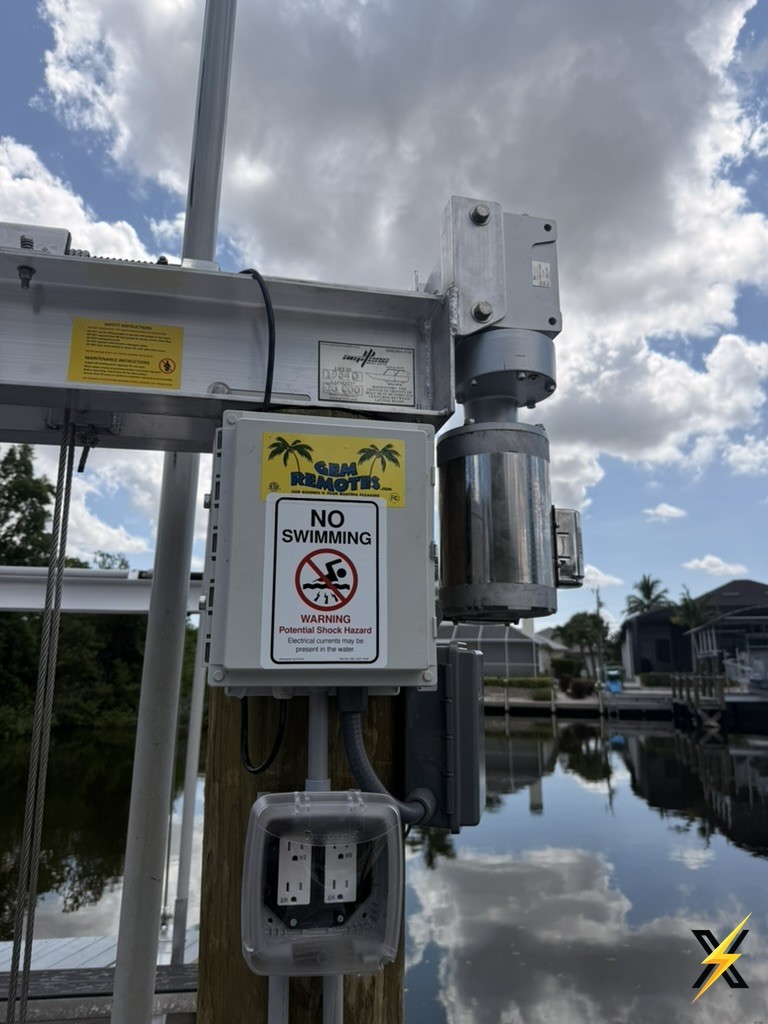
Step-by-Step Troubleshooting You Can Try Safely
Important: Never bypass, remove, or replace a GFCI with a standard breaker to “fix” tripping. That removes shock protection for anyone near the pool. If you are not comfortable working around electrical equipment, stop here and call a licensed electrician.
- Reset and observe. Press RESET on the GFCI outlet or flip the GFCI breaker to ON. Note whether it trips immediately, after a few seconds, or only when the pump engages.
- Check for obvious moisture. Look inside the timer box and disconnect for standing water, rust, or green corrosion. If the pad flooded during a recent storm, let everything dry 24–48 hours before retesting.
- Isolate the pump. Turn off the pump at the timer and reset the GFCI. If it holds without the pump running, the fault is likely in the pump motor or its dedicated circuit — not the GFCI device itself.
- Test other equipment on the same circuit. Turn off the pool light, salt system, or heater individually and reset the GFCI each time. This identifies which device is leaking current.
- Inspect the bonding wire. NEC requires an equipotential bonding grid connecting pool rails, ladders, pump, and metal components. A broken or corroded bonding connection can cause GFCI issues and is a safety concern. Look for green patina or disconnected bonding lugs.
- Call your pool company for motor testing. If the GFCI trips only when the pump runs, have a pool technician test the motor windings. If the motor is failing, electrical repair will not help — the motor needs replacement.
When the Problem Is the Pump vs. the Wiring
If the GFCI holds with the pump off but trips within seconds of the pump starting, the motor is the prime suspect. Pool pumps in Naples typically last 8–12 years depending on runtime and maintenance. A motor that hums, overheats, or trips the GFCI on startup is telling you it is near end of life.
If the GFCI trips randomly — even with the pump off — look at wiring, moisture intrusion, and shared circuits. Random trips that worsen after rain point to water in a junction box or conduit. Trips that started after a pool remodel or new equipment installation may indicate a wiring error at the pad.
If the GFCI will not reset at all (stays tripped immediately), there is an active fault on the circuit. Do not keep resetting it. Turn off the circuit at the panel and call for professional diagnosis.
Florida Code Requirements for Pool Equipment
Under the Florida Building Code and NEC Article 680, pool pump motors, pool lights, and most pool equipment circuits require GFCI protection. Collier County permits and inspections enforce these requirements on new construction and renovations. Bonding and grounding requirements are equally important — they keep all metal pool components at the same electrical potential so you do not get voltage differences in the water.
If your pool was built before modern GFCI requirements and still has standard breakers on pump circuits, that is a code deficiency worth correcting — especially before selling a Naples property or filing an insurance claim after an incident.
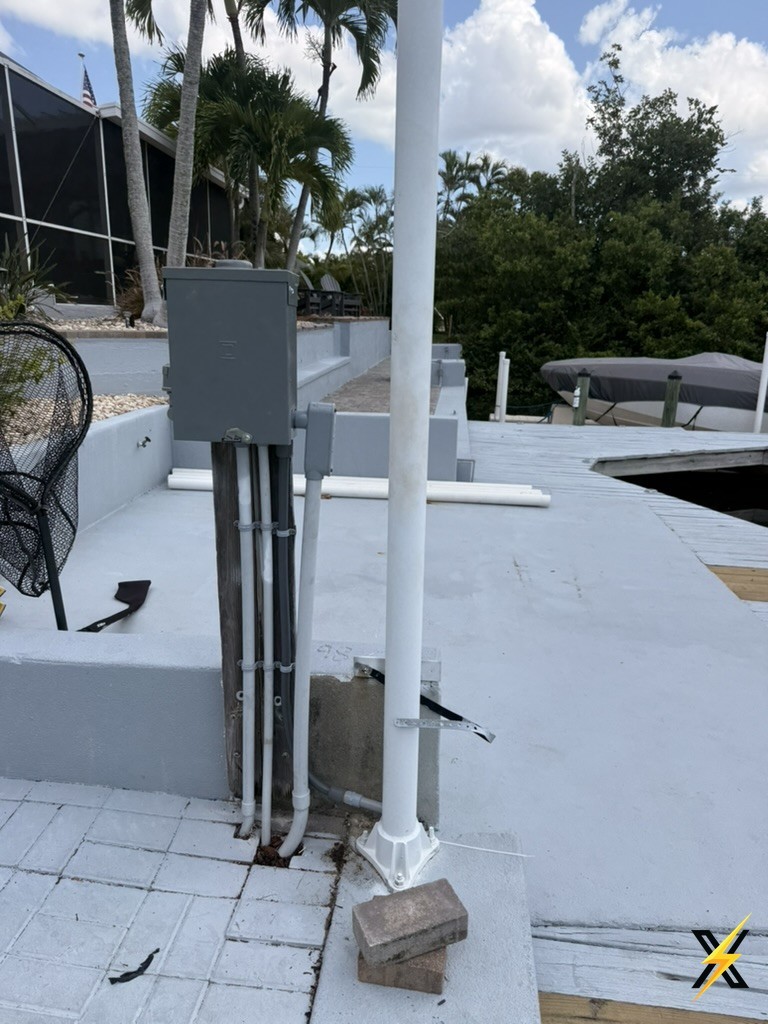
When to Call a Licensed Electrician in Naples
Call a professional when:
- The GFCI will not reset or trips immediately every time
- You see burnt marks, melted wire insulation, or smell something hot at the equipment pad
- The pump motor tests fine but the GFCI still trips — indicating a wiring fault
- Underground conduit is damaged or waterlogged
- You need to upgrade from an outdated setup to current NEC-compliant GFCI and bonding
ElectriciansX troubleshoots pool equipment pad electrical in Naples, Marco Island, and throughout Collier County. We test circuits, replace failed GFCI devices, repair conduit runs, and verify bonding — all permitted and inspected when required.
Frequently Asked Questions
Can I just replace the GFCI breaker with a regular breaker?
No. Removing GFCI protection on a pool circuit violates NEC code, voids insurance coverage in many cases, and removes shock protection for anyone in or near the pool. Always fix the underlying fault.
Why does my pool GFCI trip after it rains?
Water is entering an enclosure, junction box, or conduit run. Inspect weatherproof covers on the timer, disconnect, and any outdoor outlets at the equipment pad. Seal or replace damaged enclosures.
Does the pool company or the electrician fix this?
It depends on the cause. Pool companies handle motor replacement and equipment. Licensed electricians handle wiring, GFCI devices, conduit, bonding, and panel work. If the motor tests good, call an electrician.
Pool Equipment Electrical in Naples
GFCI troubleshooting, bonding verification, and equipment pad wiring — licensed, permitted, and done right.