
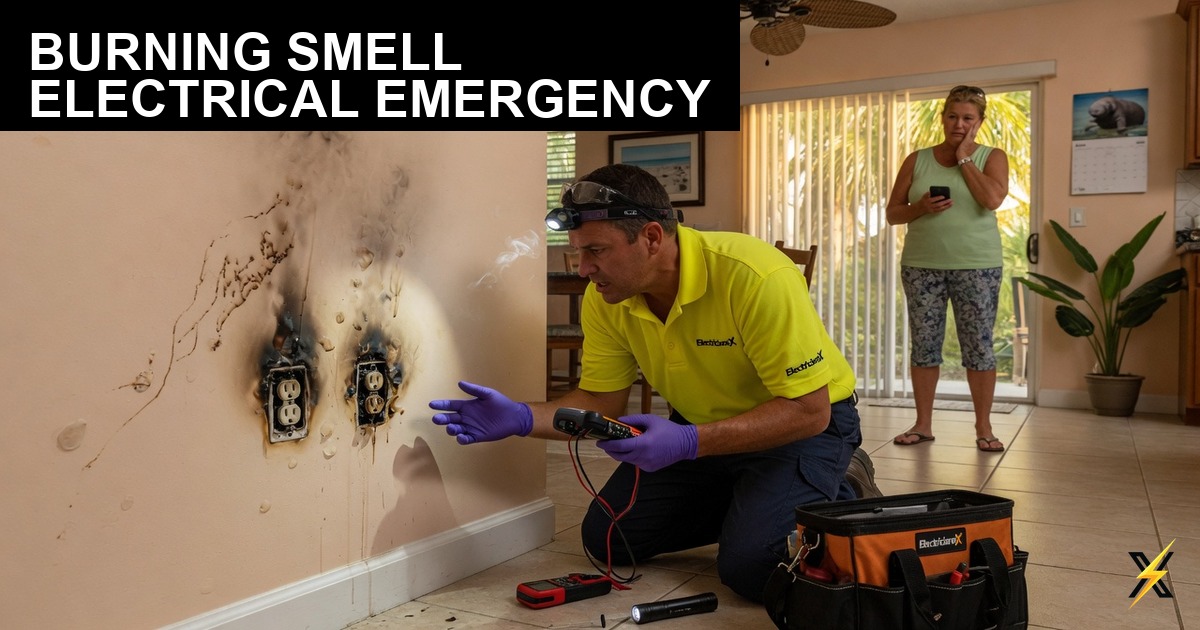
You walk past the kitchen outlet and catch it — a sharp, acrid smell like melting plastic or hot dust. Or you open the garage door and smell burning near the electrical panel. Maybe it comes and goes. Maybe it has been there for days and you kept telling yourself it was the neighbor’s barbecue.
A burning smell from an outlet or electrical panel is never normal. It is never “probably fine.” It means something is overheating — a connection, a wire, a breaker, or an outlet device — and overheating electrical components are minutes or hours away from igniting surrounding material. In Southwest Florida, where humidity accelerates corrosion, salt air attacks connections, and aging panels run at capacity year-round, burning smells are one of the most urgent calls we receive at ElectriciansX. Here is exactly what to do — in order — before someone gets hurt or your house catches fire.
What a Burning Electrical Smell Actually Is
Electrical burning smells are distinct from other household odors. They typically smell like:
- Hot plastic or vinyl — Overheating outlet faceplates, wire insulation, or appliance cords melting under current load
- Hot metal or “electrical” dust — Overheating breaker contacts, bus bars, or loose terminal screws arcing and oxidizing
- Fishy or urine-like odor — A known sign of melting plastic components in outlets, breakers, or wire nuts. Many homeowners do not recognize this as electrical — but electricians do
- Ozone or sharp chemical smell — Active arcing inside a panel, switch, or outlet
The smell means heat is being generated where it should not be. Heat at a connection point above 185°F can ignite dust, insulation, or wood framing inside walls. Electrical fires often start inside walls or ceilings where you cannot see them — the smell is your warning before the flame.
Step-by-Step: What to Do Right Now
- Do not ignore it. Burning smells do not resolve themselves. A loose connection that smelled yesterday is hotter today.
- Locate the source if you can safely. Walk the room. Is the smell strongest at a specific outlet, switch, appliance, or the panel? Unplug everything from the affected outlet — do not touch the outlet face if it is warm or discolored.
- Turn off the circuit. At the panel, flip the breaker for the affected circuit to OFF. If the smell is at the panel itself or you cannot identify the circuit, turn off the main breaker. Use a flashlight — never touch a panel that is sparking, smoking, or wet.
- Check for visible damage. Discolored outlets (brown or black marks), melted plastic, warm faceplates, or buzzing sounds confirm an active problem. Take photos for your electrician and insurance.
- Call for help. If you see fire or heavy smoke: 911 first. If smell only: call a licensed electrician immediately. ElectriciansX offers emergency electrical service across Lee and Collier counties — call to ask about urgent or after-hours availability.
- Do not turn the circuit back on. Until a licensed electrician identifies and repairs the cause, leaving the breaker off is the safest choice — even if it means no power to part of your home.
Common Causes in Southwest Florida Homes
Every burning smell has a physical cause. These are the ones we find most often in Cape Coral, Fort Myers, Naples, and Estero:
- Loose outlet or switch connections. Back-stabbed outlets (wires pushed into spring slots instead of screw terminals) are the number-one cause of outlet burning smells in Florida homes built 1975–2005. The spring loosens from thermal cycling; resistance builds; heat follows.
- Overloaded circuit. Too many devices on one circuit — space heaters, microwave, and coffee maker on the same kitchen circuit, for example. The wiring overheats without tripping the breaker if the load is just under the breaker rating but above what the wire can safely carry continuously.
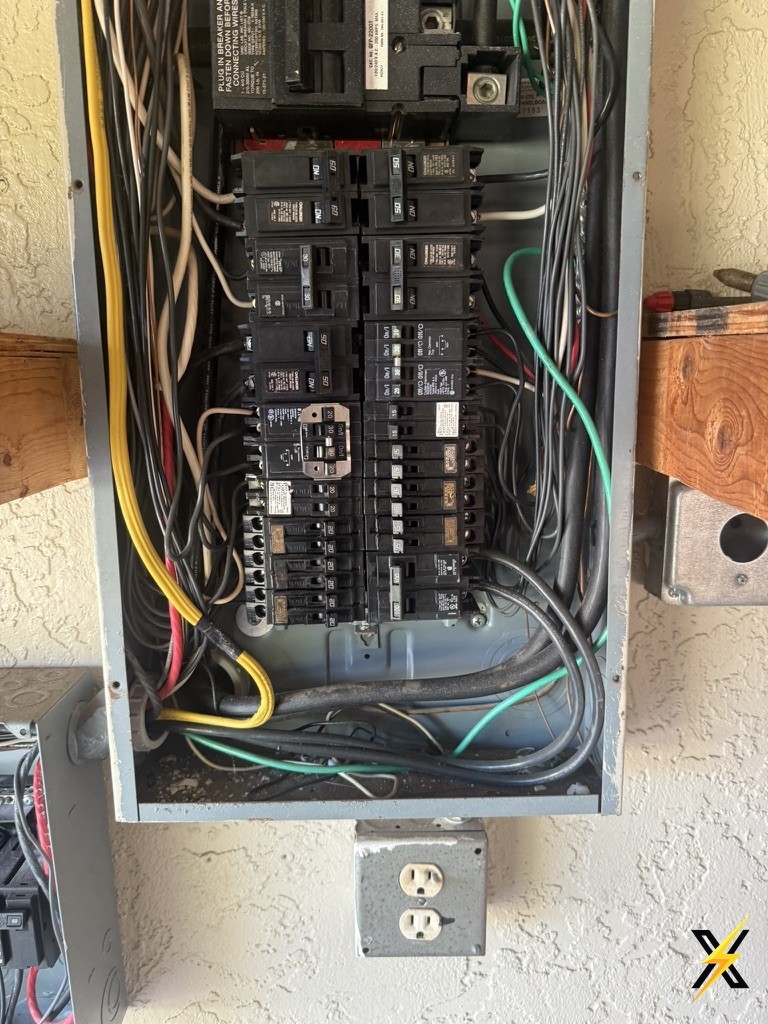
- Failing circuit breaker. A breaker with worn contacts can overheat at the bus bar connection without tripping. You smell it at the panel. Challenger, FPE, and Zinsco breakers are notorious for this — another reason to replace those panels entirely.
- Corroded connections in coastal homes. Salt air in Fort Myers Beach, Sanibel, Marco Island, and Naples waterfront properties corrodes copper terminals green. Corrosion increases resistance; resistance creates heat. We find this at outdoor outlets, pool equipment panels, and garage subpanels.
- Aluminum wiring connections. Homes built 1965–1975 with aluminum branch circuit wiring are prone to overheating at outlet and switch connections unless proper CO/ALR devices and pigtailing were installed. A burning smell at outlets in a 1970s Cape Coral home should be treated as an aluminum wiring emergency.
- Damaged appliance cord or plug. A frayed cord on a window A/C unit, refrigerator, or dryer can overheat at the plug before the breaker trips. Unplug the appliance and smell the outlet — if the outlet smells worse than the cord, the problem is in the wall.
- Post-storm water intrusion. After hurricanes and heavy thunderstorms, water in outlet boxes, panels, or conduit creates arcing when power is restored. If the burning smell started after Ian, Debby, or a recent storm, water damage is likely. See our guide on post-storm electrical problems.
- Improper DIY wiring. Unpermitted renovations, oversized breakers on undersized wire, and double-tapped breakers all create fire risks that announce themselves as burning smells before they trip.
Outlet Burning Smell vs. Panel Burning Smell
The location of the smell changes the urgency and the likely repair:
| Smell Location | Likely Cause | Immediate Action |
|---|---|---|
| One outlet or switch | Loose connection, back-stab failure, or overloaded outlet | Turn off circuit, unplug everything, call electrician |
| Electrical panel | Failing breaker, loose main lug, bus bar damage | Turn off main breaker, call electrician same day |
| Multiple rooms, no visible source | Loose neutral at panel, shared neutral issue | Turn off main, call electrician — fire risk |
| Only when appliance runs | Failing appliance or dedicated circuit overload | Stop using appliance, turn off circuit, diagnose |
A panel burning smell is always same-day urgent. A single outlet smell is urgent but slightly less likely to involve the whole house — unless the outlet is on a circuit with aluminum wiring or a shared neutral, in which case treat it as a panel-level emergency.
What NOT to Do
- Do not spray air freshener and wait. Masking the smell does not stop the heating.
- Do not reset a tripped breaker repeatedly. A breaker that trips and smells is telling you it found a problem. Resetting without diagnosis forces current through a damaged connection.
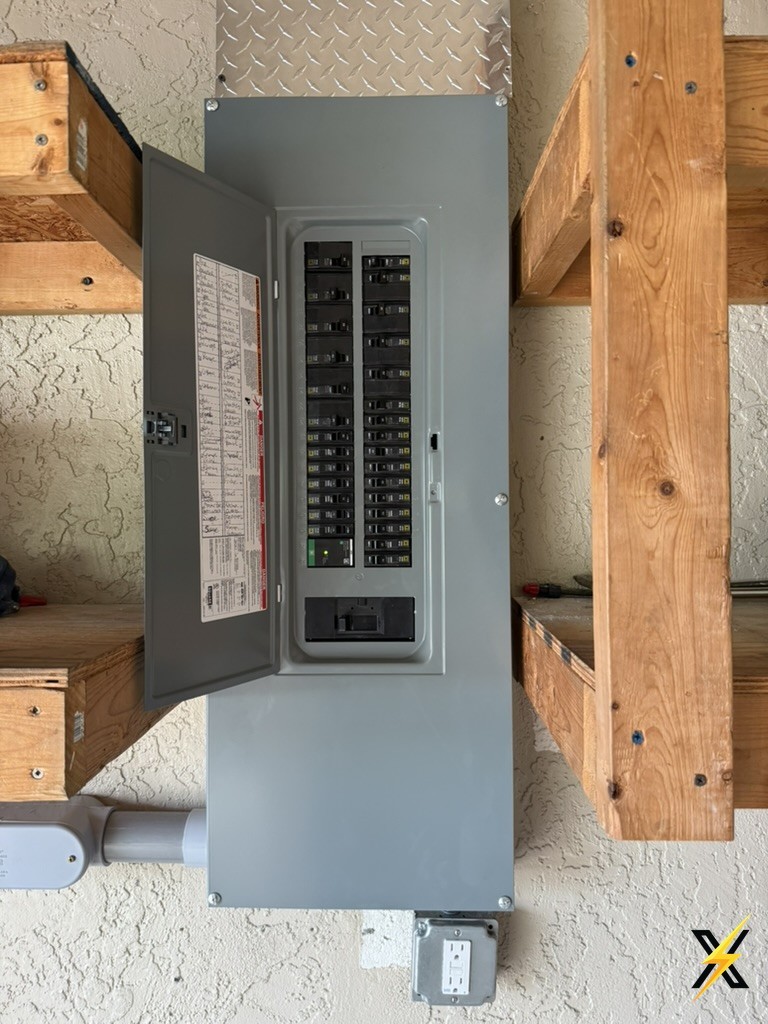
- Do not open the panel cover unless you are a licensed electrician. Burning smells at the panel mean active arcing may be occurring behind the dead front. Opening it without proper PPE and training is dangerous.
- Do not replace the outlet yourself if there is discoloration or melting. The damage may extend into the box, the wire insulation, or the stud cavity behind the wall. Replacement requires inspection of the full connection.
- Do not assume the smell is from outside. SW Florida has plenty of outdoor smells — swamp, mulch, seaweed. Electrical burning is sharper, more acrid, and usually strongest indoors near a specific point.
What a Professional Emergency Electrical Visit Includes
When ElectriciansX responds to a burning smell call, we:
- Identify the source with thermal imaging and visual inspection
- Test connections, voltage, and amperage at the affected circuit
- Remove and inspect outlets, switches, or breakers showing heat damage
- Repair or replace damaged wiring, connections, and devices
- Inspect adjacent outlets on the same circuit for heat damage that has not yet produced a smell
- Provide a written report for insurance if storm or surge damage is involved
If we find panel-level damage — melted bus bar, overheated main breaker, or multiple failed breakers — we will recommend a panel upgrade or emergency panel replacement before restoring power. Your safety comes before convenience.
For homes with recurring burning smells that come and go, schedule a full electrical safety inspection. Intermittent smells often indicate a connection that heats under load and cools when the circuit is off — a classic fire precursor that only shows up when you run the dryer or the A/C.
Southwest Florida Local Context
Florida leads the nation in electrical fire risk factors: older housing stock, high humidity, heavy A/C loads, pool equipment, and hurricane-related water intrusion. Lee County Fire Rescue and Collier County Fire Department both respond to electrical fires originating at outlets and panels every year — many preventable if the burning smell had been acted on sooner.
Homes in Cape Coral’s 1970s and 1980s developments, Fort Myers River District renovations, and older Naples beach cottages are disproportionately represented in our burning smell emergency calls. If your home has never had an electrical inspection and is more than 30 years old, the smell is your signal to schedule one — not just fix the one outlet.
Frequently Asked Questions
The smell went away on its own. Am I safe?
No. A connection that overheated enough to produce a smell has been damaged. It will overheat again — likely worse — when the circuit carries load. Have it inspected before using the circuit.
Can a burning smell come from the A/C unit and not the wiring?
Yes — a failing A/C motor or belt can produce burning smells. But if the smell is at the outlet the A/C plugs into, or at the panel breaker for the A/C circuit, the electrical connection is the problem. Trace the smell to its strongest point.
Will my insurance cover electrical fire damage?
Most homeowner policies cover electrical fires from sudden and accidental causes. Known code violations, unpermitted DIY wiring, and deferred maintenance can complicate claims. A professional inspection and permitted repair strengthens your position.
Electrical Emergency? We Respond Fast.
Burning smells, sparking outlets, tripped main breakers — emergency electrical service across Southwest Florida.