
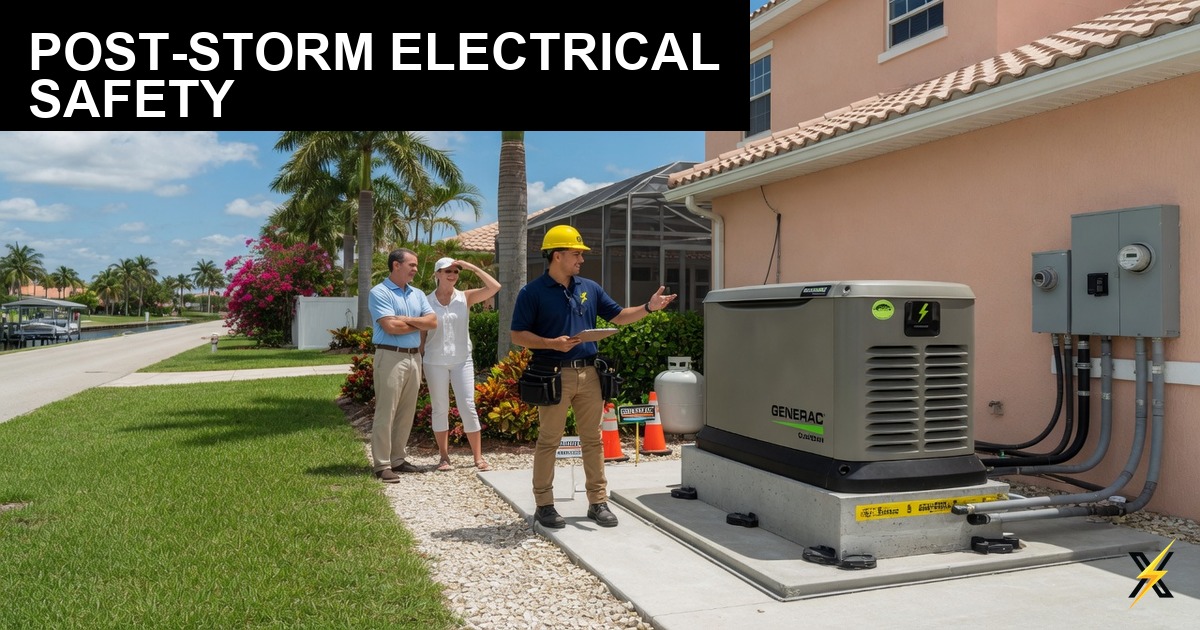
Sanibel has always been one of those places that feels almost too good to be true — white sand beaches, wildlife refuges, a pace of life that the rest of Florida quietly envies. Hurricane Ian changed things profoundly in September 2022, and the island has been on a long road of rebuilding and recovery since. If you own a home on Sanibel — or on nearby Fort Myers Beach, which faced similar devastation — understanding how to protect your electrical system before and after a storm is no longer optional. It’s essential.
The Storm Is Over — But the Danger Isn’t
When a major storm passes through the Sanibel area, the obvious dangers — wind, surge, flooding — go away once the skies clear. The electrical dangers often don’t. Flooded homes, wet electrical panels, damaged wiring, and compromised appliances can present serious hazards for days or even weeks after a storm, especially as homeowners return to assess the damage.
Every year after major storms in Southwest Florida, licensed electricians respond to calls from homeowners who turned their power back on too soon, re-energizing flooded or damaged wiring. The results range from tripped breakers to electrical fires to electrocution. Before you touch a switch or reset a breaker after a storm, there are things you need to know.
Before You Re-Enter a Flooded Home
If your Sanibel home took on water during a storm — even a few inches — do not re-enter until the power has been disconnected at the utility meter. Contact FPL and request a disconnect before entry. Do not attempt to disconnect the meter yourself. Even with the main breaker inside your home turned off, there is still live voltage at the meter base and the service entrance conductors. This is work for the utility company and for licensed electricians.
Once the utility has disconnected service and the home is confirmed safe to enter, have a licensed electrician inspect the electrical system before power is restored. This is not optional — it is the difference between a safe home and a fire waiting to happen.
Signs Your Electrical System Was Damaged by the Storm
After the water recedes and you can safely assess your home, watch for these signs that your electrical system needs professional evaluation before power is restored:
- Water lines on or above outlets, switches, or the panel: Any electrical component that was submerged needs to be inspected and likely replaced before use.
- Discoloration, rust, or corrosion on panel components: Moisture inside an electrical panel creates corrosion on breakers, bus bars, and wiring terminals that isn’t safe to ignore.
- Burning smell or visible scorch marks: A surge or short circuit during the storm may have caused localized damage that isn’t visible in normal lighting.
- Breakers that trip immediately upon reset: This suggests a fault in the circuit that needs to be diagnosed before restoring that branch of the system.
- Outlets or switches that feel warm or show visible damage: Salt water is especially corrosive to electrical contacts — coastal storm floods create damage that fresh water does not.
When in doubt, don’t restore power. The cost of an electrical inspection is far less than the cost of a fire, and far less than the cost of rebuilding twice.
What Is a Post-Storm Electrical Inspection?
A licensed electrician performing a post-storm inspection will evaluate your service entrance, main panel, sub-panels, branch circuit wiring, outlets, switches, fixtures, and hardwired appliances for storm-related damage. They’ll test circuits for shorts and ground faults, inspect the panel interior for moisture and corrosion, and document what’s safe to restore and what needs to be replaced. In many cases, homeowners are able to restore power to unaffected portions of the home while damaged sections are repaired — keeping the family comfortable while the work is completed properly.
Why Surge Protection Matters Even More After a Storm
When utility power is restored after a major outage, the restoration process is not always smooth. Voltage irregularities — sometimes called “dirty power” — frequently accompany the return of utility service after a storm. Equipment that survived the storm itself can be damaged in the minutes after power comes back on if your home isn’t protected.
Homes on Sanibel and Fort Myers Beach that installed whole-home surge protection before Hurricane Ian reported significantly less electrical damage to appliances and electronics than those without it. This is one of those investments that seems unnecessary right up until the moment it saves thousands of dollars in appliance replacements.
If your Sanibel home doesn’t yet have a panel-mounted surge protective device, adding one is one of the highest-value things you can do as part of a post-storm rebuild or renovation. See our surge protection page for more information on what we install.
Rebuilding After the Storm: What Sanibel and Fort Myers Beach Homeowners Should Know
Homes that were significantly damaged by Ian and are being rebuilt to current code are now required to include arc-fault circuit interrupters (AFCIs) on most circuits, ground-fault circuit interrupters (GFCIs) in wet areas, tamper-resistant outlets, and whole-home surge protection. In many cases, a rebuild is an opportunity to upgrade the electrical system to a higher standard than what existed before — one that’s better equipped for future storms.
If you’re in the middle of a Sanibel rebuild and working with a general contractor who isn’t prioritizing the electrical rough-in timeline, that’s a problem worth addressing early. Electrical work needs to be done in sequence, permitted, and inspected — shortcuts taken during reconstruction often show up as expensive problems years later.
Generators: The Other Half of Storm Preparedness
Post-storm electrical safety is about protecting what you have. Pre-storm preparedness is about ensuring your home stays functional when the grid goes down. For Sanibel homeowners, a standby generator connected through a properly installed transfer switch is the most complete solution to storm-related outages. Combined with whole-home surge protection, it forms a complete picture of electrical resilience — power stays on during the storm, and the electrical system is protected from surge damage when power comes back. Our generator installation page covers what’s involved.
Frequently Asked Questions
My power is off but my neighbor’s is on — is my home safe to enter?
Not necessarily. Even if utility power to your meter is disconnected, your home’s electrical system may still have hazards from storm damage, standing water, or downed wires. Have a licensed electrician assess the system before re-energizing, regardless of what the neighbors are doing.
My panel is in a closet that didn’t flood — can I assume it’s okay?
Possibly, but not certainly. Salt air and high humidity from a coastal storm can penetrate to areas that didn’t experience direct flooding. Have a licensed electrician open the panel and inspect the interior before restoring power if your home experienced significant storm conditions.
How do I find a licensed electrician after a major storm when everyone is busy?
Call early, explain your situation clearly, and ask about scheduling. After a major storm, licensed electrical contractors prioritize properties with safety concerns — flooded panels, damaged service entrances — over routine work. ElectriciansX serves Sanibel, Fort Myers Beach, Cape Coral, and Fort Myers and can help triage your situation over the phone.
Do I need to replace all my appliances if my home flooded?
Most appliances that were submerged in floodwater should be replaced, not dried out and reconnected. Salt water in particular causes rapid corrosion of motor windings, heating elements, and control boards. Your insurance adjuster and a licensed electrician can help you document what needs replacement for your claim.
Don’t Wait for the Next Storm
If your Sanibel home came through recent storms without whole-home surge protection, a generator, or a post-storm electrical inspection, now is the time to address all three. The next storm season is always closer than it seems. Call us today — we know this community, we’ve been doing this work throughout the rebuild, and we’re ready to help you prepare the right way.