
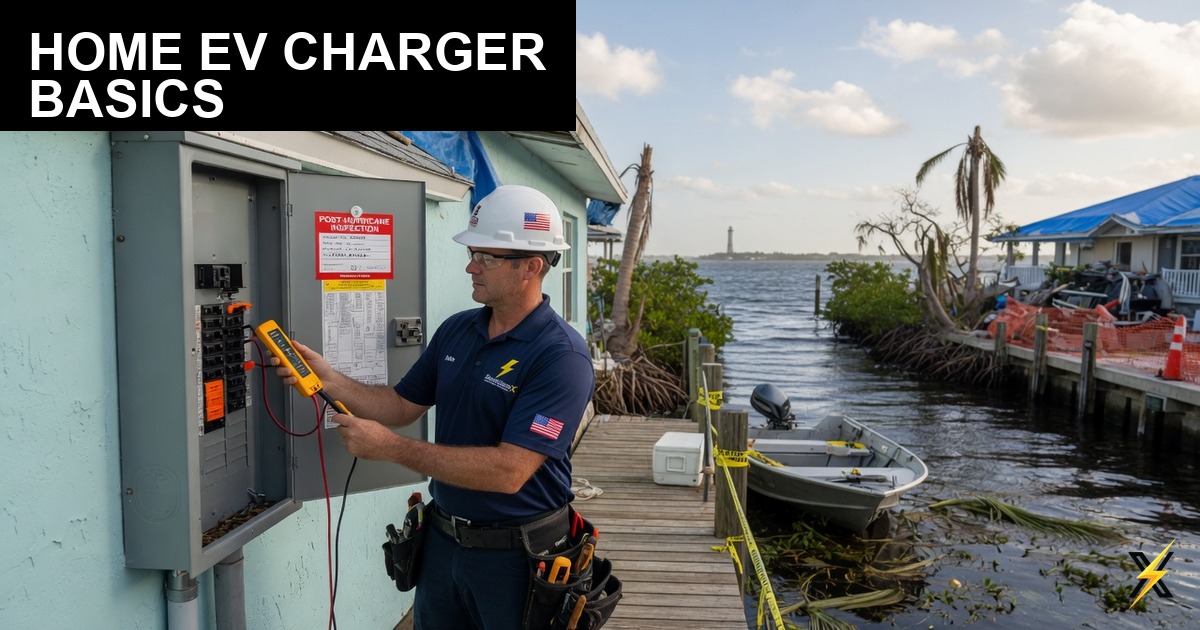
Electric vehicles are showing up everywhere in Southwest Florida — in driveways in Cape Coral, on the roads through Fort Myers Beach, and parked outside restaurants in Sanibel. The appeal is obvious: lower fuel costs, reduced emissions, and a driving experience that most owners quickly come to prefer. But there’s one part of owning an EV that doesn’t get talked about nearly enough: charging it at home, and doing it right.
The Problem with Plugging Into a Regular Outlet
Every electric vehicle comes with a Level 1 charger — a cable that plugs into a standard 120-volt household outlet. It works. Technically. But charging a modern EV on Level 1 is like filling a swimming pool with a garden hose. A full charge can take 40–60 hours on a depleted battery. Most EV owners who start with Level 1 charging quickly discover that they wake up every morning with less range than they expected, especially if they’re driving more than 30–40 miles per day.
In Fort Myers Beach, where daily driving can involve longer stretches to reach Cape Coral, Fort Myers, or Sanibel, Level 1 charging often isn’t enough to keep up with a typical day’s driving. And running a high-amp appliance continuously on a standard household circuit puts wear on your wiring and outlet over time — not a situation you want developing quietly behind a wall.
What Is Level 2 Charging and Why Does It Matter?
A Level 2 charger operates on a dedicated 240-volt circuit — the same type of circuit that powers your electric dryer or your central AC. It delivers 4 to 8 times more power than a Level 1 charger, typically adding 25–35 miles of range per hour of charging. Most EV owners can fully charge overnight from nearly any state of charge. You plug in when you get home. You wake up with a full battery. That’s it.
Level 2 charging equipment (called Electric Vehicle Supply Equipment, or EVSE) ranges from basic hardwired units to smart chargers that connect to Wi-Fi, schedule charging during off-peak utility hours, and monitor energy usage through an app. Some even integrate directly with solar panel systems.
Why You Need a Licensed Electrician — Not Just the Manufacturer’s App
EV charger manufacturers will often direct you to a third-party installation service, and some homeowners try to turn it into a DIY project. Here’s what they miss: a Level 2 charger installation involves a dedicated 240-volt circuit, a correctly sized breaker, appropriate wiring gauge for the run length, weatherproof outdoor installation considerations (important for coastal Fort Myers Beach properties), and — in most cases — a permit from Lee County.
Doing this work without a licensed electrician risks overloaded circuits, incorrect wire sizing that creates a fire hazard, a failed county inspection, and potentially voided homeowners insurance coverage on any related claim. A licensed electrician does the job once, correctly, with the right materials, and with a permit that protects you.
Does Your Panel Have Room for an EV Charger?
This is one of the most important questions to ask before purchasing an EV — and the answer isn’t always obvious. A Level 2 EV charger typically requires a 50-amp breaker on a dedicated circuit. If your electrical panel is already near capacity, or if it’s an older panel that wasn’t designed for the electrical loads of a modern home, adding a 50-amp circuit may require a panel evaluation or upgrade.
This is especially relevant for older homes in Fort Myers Beach, many of which have smaller panels that were sized for homes without EVs, multiple AC units, or all the other electrical demands of a modern household. The good news: assessing your panel is quick, and if an upgrade is needed, it can usually be combined with the EV charger installation in a single visit.
What About Coastal and Flood Zone Considerations?
Fort Myers Beach properties face specific challenges that inland homes don’t. Coastal salt air accelerates corrosion on electrical components, which means the conduit, hardware, and charger unit selected for a beachside installation need to be appropriate for the environment. Post-Ian rebuilds and elevated homes also need careful consideration of where the charger is located relative to base flood elevation requirements. A licensed electrician familiar with Lee County’s post-storm requirements will know how to handle these details correctly.
How Long Does EV Charger Installation Take?
For most homes in the Fort Myers Beach area, EV charger installation takes three to five hours on installation day. The overall timeline from initial call to a fully operational charger — including permitting — is typically one to three weeks. If a panel upgrade is also needed, allow a bit more time.
Charging Solutions Across SW Florida
We install EV chargers throughout Fort Myers Beach, Cape Coral, Fort Myers, and Sanibel. Whether you’re in a post-Ian rebuild, a new construction, or an existing home, we’ll assess your panel, run the permit, handle the installation, and make sure your charger is ready before your new vehicle arrives.
Frequently Asked Questions
Can I install a charger in my garage if it’s on the ground floor near flood elevation?
Yes, but placement and mounting height matter — especially for elevated or rebuilt homes in Fort Myers Beach. Lee County and FEMA guidelines establish base flood elevations that can affect where electrical equipment is permitted to be installed. We’re familiar with these requirements and will install your charger at the appropriate location and height.
Can I charge two EVs with one charger?
Some smart chargers support dual-vehicle charging through load-sharing technology. This is a growing option for households with two EVs. We can walk you through the options during your assessment and let you know whether your panel capacity supports it.
What’s the difference between a hardwired charger and a plug-in charger?
A hardwired charger is permanently wired into your electrical system. A plug-in charger connects to a dedicated 14-50 or 6-50 outlet. Either approach delivers Level 2 charging — the difference is mostly about portability. Plug-in setups let you take the charging unit with you if you move. A licensed electrician can walk you through which makes more sense for your situation.
Does installing an EV charger add value to my home?
Most real estate professionals say yes, particularly in markets where EV ownership is growing. A permitted, professionally installed Level 2 charger is a selling point that more buyers actively look for. An unpermitted or incorrectly installed charger, on the other hand, can become a problem during a home inspection.
Get Ready Before Your EV Arrives
The best time to install a Level 2 charger is before your new vehicle is delivered — not after you’ve spent your first week charging on a 120-volt outlet. Call us today and let’s get your home ready. We’ll handle the assessment, the permit, and the installation from start to finish.