
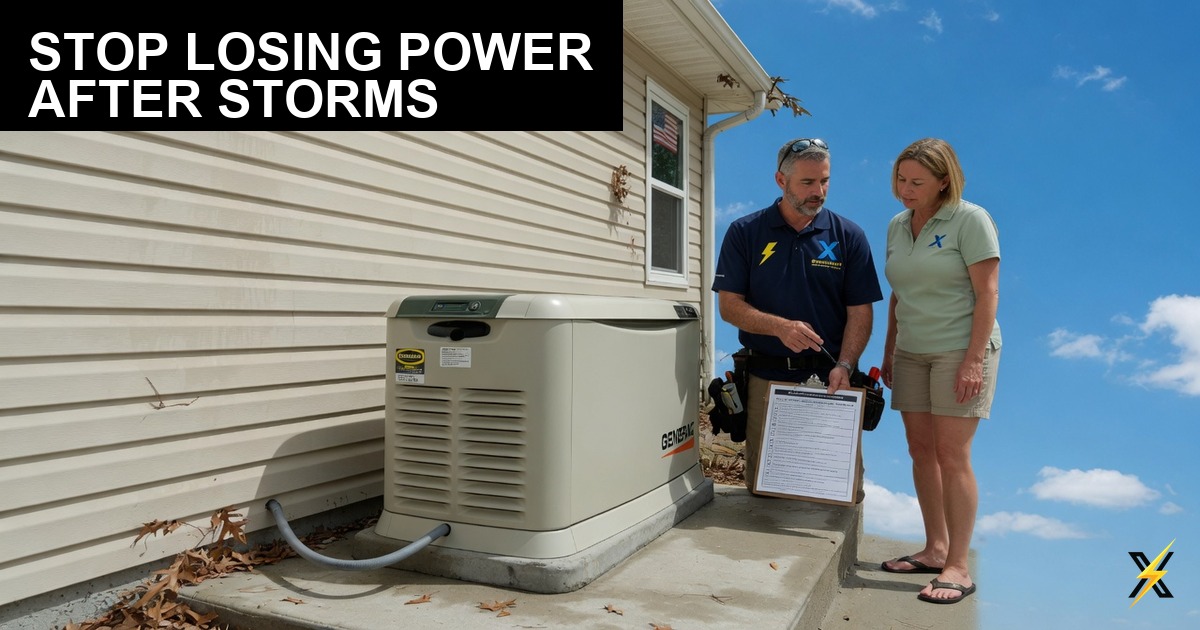
Fort Myers is one of the best places to live in the country — right up until a storm rolls in off the Gulf and the power goes out for three days. If you’ve been through hurricane season here more than once, you know the routine: fill the bathtub, find the flashlights, wonder if the food in the fridge is going to make it. There’s a better way to handle it. A permanently installed standby generator keeps your home running automatically, no matter what the storm brings — and installation is simpler than most homeowners expect.
Fort Myers and the Reality of Storm Season
Southwest Florida’s storm season runs from June through November, with the peak period from August through October. Fort Myers sits at a vulnerable spot on the Gulf Coast, making it a frequent target for tropical weather systems. In recent years, the area has experienced power outages ranging from a few hours to more than a week. For families with young children, elderly relatives, or anyone dependent on medical equipment, those outages aren’t just inconvenient — they can be genuinely dangerous.
Even during “minor” storms that don’t make the national news, localized outages in Fort Myers can last 24–48 hours or longer as crews work to restore service to thousands of customers. A standby generator removes that uncertainty entirely.
Portable Generator vs. Standby Generator — What’s the Real Difference?
Many Fort Myers homeowners already have a portable generator sitting in the garage. It works, but it requires manual setup every time the power goes out: rolling it outside, adding fuel, running extension cords, and hoping you don’t forget to turn it off before going to sleep. Portable generators also cannot be connected to your home’s electrical panel without a proper transfer switch or inlet — doing so illegally can backfire power onto utility lines and endanger linemen.
A standby generator is permanently installed outside your home, connected directly to your electrical panel through an automatic transfer switch. When utility power fails, the generator senses the outage within seconds and starts automatically. You don’t have to do anything. By the time you’ve walked to the window to look outside, the lights are already back on. When utility power is restored, the generator shuts off and returns control to the grid — also automatically.
What Size Generator Do You Need?
Generator sizing depends on which circuits you want to protect. Options range from smaller units that power essential circuits (AC, refrigerator, lights, outlets) to whole-home generators that run everything simultaneously. For most Fort Myers homes:
- 10–14 kW: Covers the essentials — AC, refrigerator, lights, and key outlets. Good fit for homes up to 2,000 sq ft with a single HVAC system.
- 16–22 kW: Whole-home coverage for mid-size homes, including two AC units, electric range, and all appliances running at once.
- 24 kW and above: Large homes, multiple HVAC systems, pools, and high electrical demand.
A licensed electrician will assess your panel, calculate your load requirements, and recommend the right unit for your home — not the biggest one available, but the right one for what you actually need.
What Fuel Does a Standby Generator Use?
Most residential standby generators in Fort Myers run on natural gas or liquid propane (LP). Natural gas generators connect to your existing gas line and never run out of fuel as long as the gas supply is running. LP generators use a propane tank on your property — typically a 250- or 500-gallon tank — which gives you days or weeks of runtime depending on the load. Your electrician and gas contractor will help you determine which fuel source makes the most sense for your property.
Do You Need a Permit for a Generator in Fort Myers?
Yes. Installing a standby generator in Fort Myers requires electrical and mechanical permits from Lee County. This covers the transfer switch installation, the electrical connection to your panel, and the generator placement and hookup. When you hire ElectriciansX, we handle the permit process for you — pulling the permits, scheduling inspections, and making sure everything is done to code. Don’t hire anyone who suggests skipping the permit. A permitted installation protects your home’s value and ensures your insurance coverage remains intact.
What Does the Installation Process Look Like?
The process typically unfolds over a few weeks:
- Assessment: We visit your home, review your electrical panel, identify the optimal generator placement, and confirm the gas connection options.
- Proposal: We provide a written quote covering the generator, transfer switch, installation labor, permits, and any required gas line work.
- Permitting: We pull the permits — this typically takes a week or two depending on Lee County’s current workload.
- Installation day: The generator is placed, the transfer switch is wired into your panel, the gas line is connected, and the unit is tested. Most installations are completed in one day.
- Final inspection: The county inspector signs off. Your generator is live and ready.
Serving the Entire SW Florida Area
We install generators throughout Fort Myers and the surrounding area, including Cape Coral, Fort Myers Beach, and Sanibel. If you’re rebuilding after storm damage or planning ahead for next season, we’re available for consultations across the region.
Frequently Asked Questions
How long can a standby generator run continuously?
Most standby generators are designed for extended runtime — commonly 200 hours or more before requiring a maintenance interval. For practical purposes, if your gas supply stays on, your generator will keep running. Some natural gas generators are rated for continuous indefinite operation with proper maintenance. Your generator’s manual will specify service intervals.
Will a standby generator power my central AC?
Yes. Central air conditioning is typically one of the highest electrical loads in a Southwest Florida home. Most mid-size standby generators (16 kW and above) are specifically sized to handle an AC system along with the rest of your essential home loads. Proper sizing during the assessment ensures your AC stays on during an outage.
What maintenance does a standby generator require?
Standby generators perform a brief automatic self-test weekly — you may hear it run for a minute or two on a regular schedule. Annual professional maintenance includes oil and filter changes, spark plug inspection, battery check, and load testing. Generac and other major brands have service programs that make this easy to schedule.
Can I add a generator to an older home with an older panel?
Often yes, but an older panel may need to be evaluated first. If your panel is already due for an upgrade — or if you have a known problematic panel — combining the generator installation with a panel upgrade is the most efficient approach. We’ll let you know during the assessment if there are any panel considerations.
Stop Waiting for the Next Outage
Fort Myers homeowners shouldn’t have to dread storm season. A professionally installed standby generator means your family stays comfortable, your food stays cold, your AC keeps running, and you don’t have to scramble every time a storm is in the forecast. Call us today for a free assessment — and let’s get you set up before hurricane season peaks.